



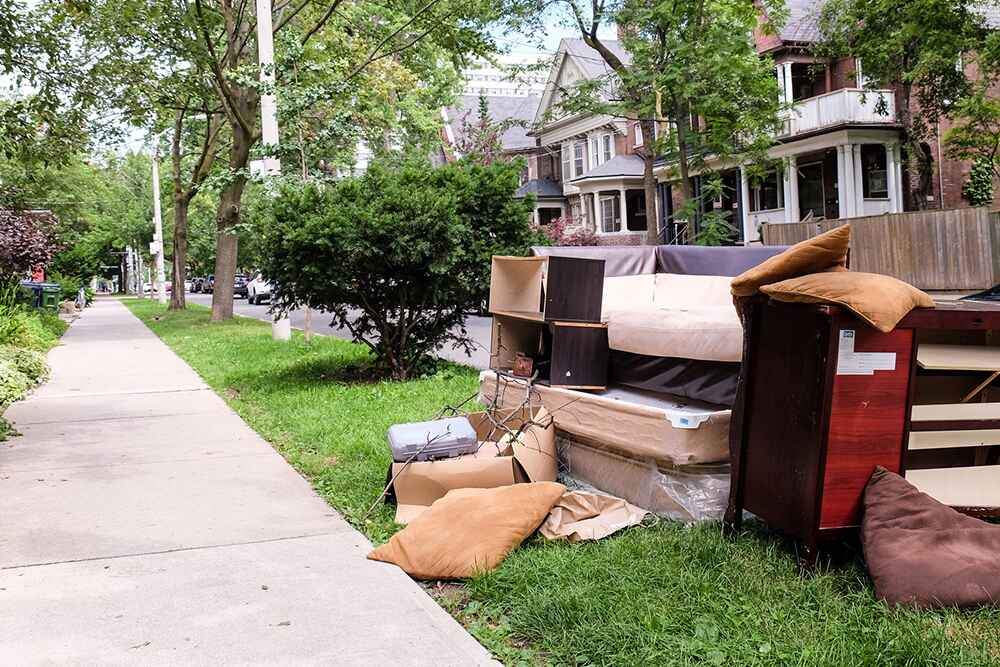
You’ve got a sofa you no longer want, a fridge that’s been in the garage for eight months, or a wardrobe that won’t fit the new bedroom. None of it fits in a bin bag, and you probably don’t have a van.
Getting rid of bulky items in London is one of those tasks that sounds straightforward until you actually try to organise it. There are options, but each one comes with conditions, costs, and limitations that are rarely spelled out clearly.
This guide covers the four main routes for bulky waste collection in London: council collections, charity donations, selling or giving away online, and professional removal. For each option, we’ll explain how it works, what it costs, what it can’t do, and when it’s the right choice for your situation.
Option 1: Book a Council Bulky Waste Collection
Most London boroughs offer a bulky waste collection service for household residents. You book online or by phone through your borough’s website, list the items you want collected, and pay a fee.
Most London boroughs prefer online bookings. After choosing your items and paying, you’ll receive a collection date, typically five to fourteen working days later. On collection day, items must be placed at the front boundary of your property before 7am.
What it costs
Council bulky waste collection in London typically costs £25 to £50 per booking, covering three to five items depending on the borough. Some boroughs offer concessions for residents on benefits. Prices vary widely: five boroughs offer the service at no charge, while Richmond charges up to £114 for three items. Always check your own borough’s website before assuming a price.
What councils will and won’t do
This is where a lot of bookings go wrong. Council crews collect from the front boundary of your property. They will not enter your home, carry items downstairs, or dismantle furniture. You must move everything to the front yourself.
Items that don’t match your booking will be left behind. If you put out more items than you booked, the extras won’t be collected. Anything deemed hazardous, from asbestos to chemicals, will not be taken.
Councils do not offer a service for business bulky waste; they have no statutory duty to do so. Businesses need to engage a private waste contractor.
When this makes sense
Council collections work well for homeowners with easy front-of-property access, who are not in a hurry and have a small number of items to shift. If you live in a flat, need items carried from upstairs, or want a quick turnaround, it is not the right option.
Option 2: Donate to a Charity That Collects

Several charities collect furniture directly from your home in London, for free. The British Heart Foundation is the most widely available. They accept sofas, wardrobes, beds, tables, and working electrical items. They’ll collect larger items for free, provided they’re in good condition and have fire safety labels where required.
Other charities worth contacting include Emmaus, the Salvation Army, Sue Ryder, and local hospice charity shops. For a full list of North London options, our guide to charity donations covers the main ones in detail.
The fire safety label rule
This is the most common reason charity collections fall through. Upholstered furniture must have a fire safety label firmly attached or sewn into every item you donate. If there are rips or tears that expose the inner fabric, it no longer meets fire safety standards and the crew will refuse to take it.
The label is usually a small tag attached to the underside of a sofa or the back of an armchair. If it has been removed or is missing, the charity cannot accept the item. Check before you book.
What charities will and won’t take
Items must have all parts in place, such as no missing doors on wardrobes, no missing drawers on a chest of drawers. Van crews will refuse items they cannot sell. Stained, damaged, or well-worn pieces are unlikely to be accepted. The charity needs to be able to sell what they collect.
When this makes sense
This option works well for furniture that is clean, complete, and in genuinely good condition. If your sofa has seen better days, it is worth being honest about whether a charity will take it before booking a slot and waiting for a crew that will ultimately say no.
Option 3: Sell or Give Away Online
Platforms like Facebook Marketplace, Freecycle, and Gumtree are worth trying for items in reasonable condition. A sofa, bed frame, or dining table that you’d struggle to donate can sometimes find a taker for free, or even a small sum.
What to expect
The experience varies considerably. For well-photographed items priced competitively, interest can come quickly. But no-shows are common, and buyers who agree to collect sometimes pull out at short notice or ask whether you can deliver.
Free giveaways often move faster than priced listings. Posting in local community Facebook groups, especially for areas like Hackney, Haringey, or Walthamstow, can get a response within hours for useful items.
Tips to avoid wasted time
Be upfront about condition in your listing and include clear photos. State collection-only and give a firm deadline: “available until Friday, then going to a clearance service.” This tends to focus minds. Avoid listing white goods unless they’re in full working order with paperwork; fridges and washing machines are harder to shift privately and have specific disposal rules if they don’t sell.
When this makes sense
Selling or giving away online is worth trying if you have time, the item is in good nick, and you don’t mind managing enquiries. It is not a reliable option if you need to clear quickly, have a mixed load, or have items in poor condition.
Option 4: Use a Professional Removal Service
A professional furniture disposal service handles things the other three options don’t. The team comes to you, collects from inside your home, and takes everything in one go, including items charities won’t touch and councils can’t access.
What a professional service can do
Unlike a council collection, a professional service will carry items out of your flat, collect from upstairs rooms, and handle any mix of bulky waste in a single visit. There are no requirements around fire labels, condition, or item counts. You don’t need to drag anything to the front of the building.
For sofa removal specifically, this matters a great deal if you live above the ground floor. A three-seat sofa on the second floor of a London flat is simply not going to make it to the kerbside without two people who know what they’re doing.
White goods and WEEE
White goods, including fridges, washing machines, dishwashers, and ovens, fall under the UK’s WEEE regulations. The WEEE Directive mandates the responsible recycling of electronic waste, including white goods. Most electrical items contain a mix of chemicals that, if left in landfill, can decay and leak toxins into the earth and waterways.
This means a fridge cannot simply be fly-tipped or left on the pavement. It needs to go to a licensed facility. A professional bulky waste collection service takes care of this for you, with documented disposal as part of the job.
What it costs and when to use it
Pricing is based on the volume and weight of what’s being collected. For a single large item, the cost is comparable to or only slightly higher than a council booking, without the two-week wait. For a mixed load, it becomes substantially more efficient.
It is the right option when:
- You need items removed quickly, including same day or next day
- Access to your property makes a council collection impractical
- You have a mix of furniture, white goods, and other bulky items
- You have items that fail charity criteria
Which Option Fits Your Situation?
Here’s the straightforward version.
If you’re a homeowner with easy kerbside access, a small number of items, and no rush, the council collection is the lowest-cost route. Book early in the week, check your borough’s exact pricing, and make sure your items are out by 7am.
If your furniture is in good condition with fire labels intact, try a charity first. The BHF and similar organisations offer a free service, and you’ll be supporting a good cause. Allow time for the wait.
If you have one decent piece of furniture and a few weeks to spare, Facebook Marketplace or Freecycle is worth a go. Keep expectations realistic.
If you’re clearing before a move, renovating, in a flat, or dealing with a mixed load of furniture and white goods, a professional removal service is the most practical option. It costs more than a council slot, but it does the full job in one visit, without the conditions and the wait.
Junk Hunters covers bulky waste collection London-wide, with two-person truck teams that handle everything from single sofas to full clearances. Get a free, no-obligation quote online or via the JunkApp.