



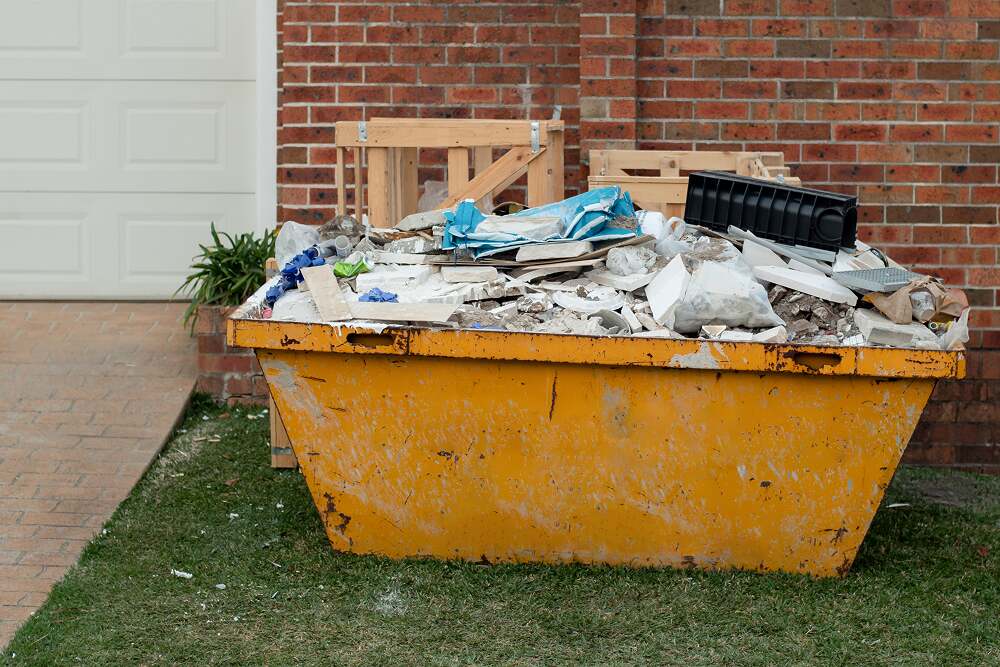
Most people assume a skip is the cheaper way to clear waste in London. Hire a container, fill it up, job done. Except that’s not the whole story.
By the time you add a street permit, factor in that you’re doing all the loading yourself, and realise you’re paying for a fixed container size whether you fill it or not, the numbers start to look very different.
This article breaks down the real costs of both options, including the figures most comparison guides leave out. If you’re trying to work out which is the better deal for your specific job, this is where to start.
What You’re Actually Paying For
The two services work in fundamentally different ways, and that matters for cost.
With skip hire, you’re renting a metal container for a set period, typically seven to 14 days. The skip is dropped at your address and collected once the hire period ends or when you call to say it’s full. All the loading is down to you. You pay a flat rate for the container size, regardless of how much space you actually use.
With rubbish removal, a two-person team comes to your property, loads everything themselves, and takes it away the same day. You pay for the volume of waste collected, not the size of the vehicle. If you have four cubic yards of junk, you pay for four cubic yards.
That distinction, flat container rate versus volume used, is what drives most of the cost difference.
Skip Hire Costs in London: The Full Picture
Base hire prices
London prices are consistently higher than the rest of the UK. Based on current market data for 2025 to 2026:
- Mini skip (2 to 4 yards): £185 to £225
- Mid-size skip (6 yards): £200 to £300
- Builder’s skip (8 yards): £250 to £400
- Large skip (12 yards): £400 to £600+
These figures include standard seven-day hire and VAT, but they do not include permits or any charges for banned items or overfilling.
Permit costs by London borough
If your skip needs to sit on a public road, you need a permit. In London, where driveways are scarce, that applies to the majority of residential jobs. Here’s what some London councils actually charge:
- Bromley: £50 for 14 days
- Harrow: £78.80 for 14 days
- Greenwich: £110 per skip
- Barking and Dagenham: £390.29 registration fee (plus per-skip costs)
Permit fees vary significantly borough by borough. Some councils also require parking bay suspensions in Controlled Parking Zones, which add a separate daily charge on top. If your road is on a TfL red route, you’ll need a highway licence from Transport for London, not the local council.
The admin alone takes two to five working days. If you need the skip quickly, that’s a real problem.
The hidden extras
Beyond the base hire and permit fees, several other costs can push the total up:
- Overfill charges: waste must not exceed the skip’s rim. If it does, the company may refuse to collect or charge for a second visit.
- Extended hire fees: keeping a skip beyond the standard period carries a daily or weekly surcharge.
- Landfill tax: currently £126.15 per tonne (as of April 2025), rising to £130.75 per tonne from April 2026. This is already factored into skip hire quotes, but it’s why London prices have climbed year on year.
- Banned item surcharges: see below.
Rubbish Removal Costs in London: What to Expect
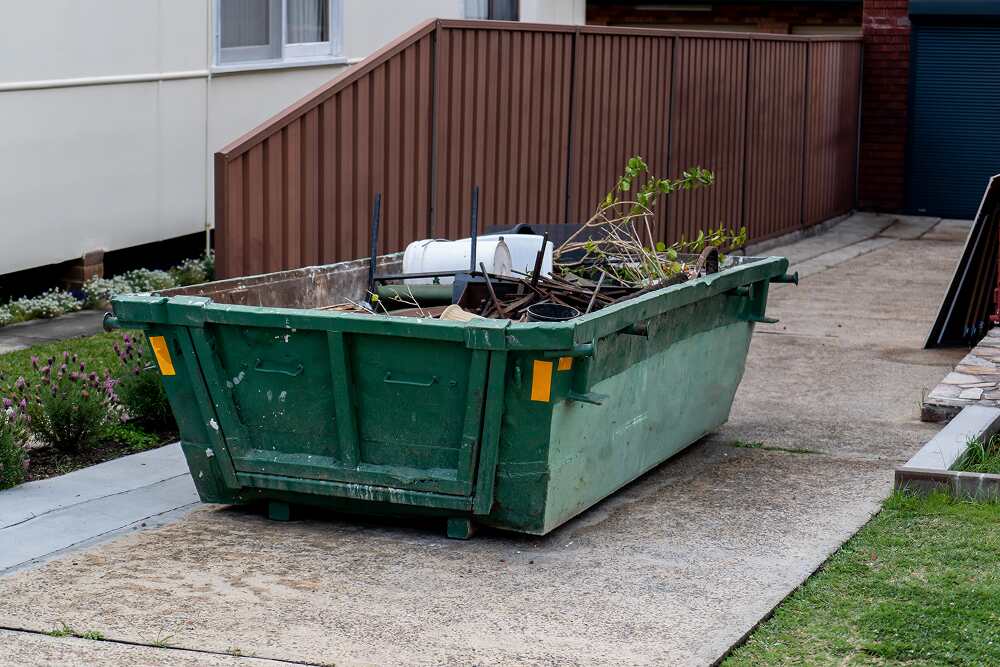
Rubbish removal is priced by the volume of waste collected, usually per cubic yard or as a percentage of a full truck load. The team does all the lifting and loading as part of the service.
Typical London price ranges based on current market rates:
- Minimum load (1 cubic yard or one large item): from £60 to £80
- Quarter load (around 3 to 4 cubic yards): £140 to £180
- Half load (around 6 to 7 cubic yards): £250 to £300
- Full truck load (up to 14 to 18 cubic yards): £400 to £500+
No permit is needed. No admin. No loading. The price you’re quoted covers labour, transport, and disposal.
For jobs involving mixed waste, furniture, appliances, garden waste and general junk together rubbish removal is consistently the more straightforward option. You can find out more about how Junk Hunters’ service compares directly to skip hire, including what each option covers and when each one makes sense.
The Permit Problem in London
The permit issue is more significant in London than anywhere else in the country, and it’s the factor that most people underestimate when getting a skip quote.
The majority of London properties do not have driveways. A terraced house in Hackney, a flat in Brixton, a rented property in Islington, in each of these cases, the skip goes on the road, and a road permit is required by law.
The permit must usually be applied for by the skip hire company, but the cost gets passed to you. Add two to five working days for processing, restrictions on double yellow lines and bus lanes, potential overnight lighting requirements, and in some cases a separate parking suspension for a Controlled Parking Zone, and what looked like a simple booking turns into a multi-step process.
If your property has private access and the skip can sit on your driveway, this is a non-issue. But for the majority of London addresses, it isn’t.
Rubbish removal vehicles park temporarily on the road during the collection. No permit is required because nothing is left on the highway.
What Can’t Go in a Skip
This is a practical detail that often gets overlooked until collection day.
The following items cannot legally go into a skip:
- Fridges and freezers
- Televisions and computer monitors
- Tyres
- Asbestos
- Batteries
- Paint and chemicals
- Plasterboard (in many cases, or at a surcharge)
If your clearance includes any of these, you’ll need a separate collection for them regardless of whether you have a skip booked. That adds cost on top of the skip hire.
Rubbish removal services handle most of these items directly, including white goods and WEEE. Rather than booking two separate services, one collection covers everything.
When Skip Hire Makes Sense

Skip hire is not the wrong answer for every job. There are situations where it is genuinely the more practical option.
A skip works well when:
- Waste is being generated gradually over several days or weeks, such as during a kitchen renovation or an extension project
- You have a private driveway or dedicated space on-site so no permit is needed
- The waste is predominantly heavy, uniform material such as soil, rubble, or hardcore, where per-tonne pricing makes more sense than cubic yard pricing
- There are several people loading the skip across multiple days and access needs to be open continuously
For example: a homeowner in Bromley undertaking a full kitchen and bathroom renovation over three weeks, with a driveway and a steady stream of tiles, timber, and plasterboard. A skip on the drive, hired for two weeks, is a sensible, cost-effective solution here.
You can compare Junk Hunters skip hire options directly if you want to explore that route with current pricing.
When Rubbish Removal Wins on Cost
For most one-off clearance jobs in London, rubbish removal is cheaper once all costs are totalled up.
It tends to be the better option when:
- The job is a single-day clear-out (house clearance, office clearance, garden waste)
- The waste is mixed and includes items a skip won’t accept
- There is no driveway, meaning a permit is unavoidable
- You do not want to do the loading yourself
- You only have a partial load and don’t want to pay for a full skip container
A practical example: a tenant clearing a two-bedroom flat in Zones 2 to 3 before the end of a tenancy. No driveway. Mixed waste including a sofa, an old fridge, and general household junk. The skip permit alone could cost £80 to £110 before the skip hire fee, and the fridge still can’t go in it. A rubbish removal booking covers everything in one visit, with no permit, no loading, and no additional fridge collection.
For a broader look at how a skip compares to a rubbish removal collection in practice, the full breakdown is worth reading before you decide.
Side-by-Side: The Real Cost Comparison
Here is how the numbers play out across two realistic London scenarios.
Scenario A: 6 cubic yards of mixed household waste, no driveway (Zone 2 London)
Skip hire (8-yard skip):
- Skip hire: £280
- Street permit (Harrow example): £78.80
- You load it yourself
- Total: approximately £360 (plus your time)
Rubbish removal (6 cubic yards):
- Half-load collection: approximately £260 to £300
- Labour included
- No permit needed
- Total: approximately £260 to £300
Rubbish removal is cheaper here by roughly £60 to £100, and you don’t lift a thing.
Scenario B: Ongoing renovation waste over two weeks, private driveway (outer London)
Skip hire (8-yard skip):
- Skip hire: £250
- No permit needed (private land)
- You load over time at your own pace
- Total: approximately £250
Rubbish removal (if waste fills roughly 8 cubic yards):
- Full load collection: approximately £400 to £450
- Labour included but timing is inflexible
- Total: approximately £400 to £450
Skip hire is the cheaper and more practical option here.
The right answer depends on your access, your waste type, and how the job is running.
Which Option Actually Saves You Money?
Here is a clear breakdown by job type:
For house clearances, flat clearances, and office clear-outs: rubbish removal wins on cost and convenience in nearly all cases, particularly when there is no driveway.
For one-off garden clear-outs with mixed waste: rubbish removal is usually more cost-effective, especially where green waste includes items that need separate handling.
For long renovation projects with a private driveway: skip hire is the better choice. You get continuous access and a fixed cost.
For commercial sites and large-scale construction: roll-on roll-off skips or regular truck collections both work. Volume and site access will determine which is more economical.
The question is not which service is cheaper in general. It is which is cheaper for your specific job, your address, and your waste. In London, where permits add real cost and most addresses lack driveways, the skip-is-cheaper assumption does not hold up as often as people think.
If you want a no-obligation quote and a straight answer, get in touch with Junk Hunters for a free collection estimate.