




You’ve finally tackled the wardrobe. Or the bookshelves. Or the spare room that’s quietly become a dumping ground over the past three years. Whatever the trigger, there’s now a small mountain of things by the door that you no longer want but that are far too good for the bin.
The question is where it should all go.
London has more than 1,500 charity shops spread across its 33 boroughs. That’s a brilliant network, but it does mean that not every shop takes the same things, and the difference between a great donation and a wasted trip often comes down to a few minutes of planning.
This guide walks you through the best London charity shops to donate to, what each type of shop is best for, and how to handle the items charity shops can’t accept.
Why Donating Beats Binning
Reuse sits higher than recycling on the waste hierarchy because it skips the energy and processing involved in breaking an item down into its raw materials.
Charity shops divert around 335,000 tonnes of textiles from landfill each year in the UK alone.
That’s a meaningful contribution to reducing what otherwise ends up incinerated or buried. The same goes for furniture, books, and homeware that get a second life with someone who actually needs them.
UK charity shops generate over £330 million a year for good causes, with London contributing a significant share. Many of the best London charity shops to donate to support hyper-local causes, such as borough-based hospices, community centres, or homelessness services that operate within walking distance of where you live.
Donating responsibly also helps reduce fly-tipping. Leaving a bag outside a closed shop counts as fly-tipping under UK law and contributes to a problem that already costs London councils millions to clear each year.
What to Sort Before You Set Off
Ten minutes of preparation transforms how useful your donation actually is.
What Charity Shops Will Usually Accept
- Clean, undamaged clothes
- Bags, shoes (paired), belts, and accessories
- Books, DVDs, vinyl records
- Kitchenware, ornaments, and small homeware
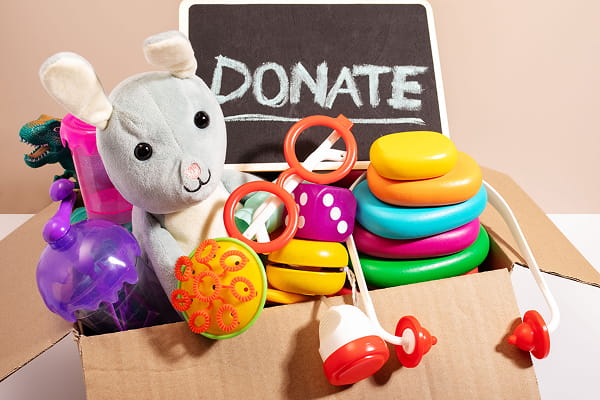
- Toys with all parts intact and in working order
- Costume jewellery
What They Usually Won’t Accept
- Stained, torn, or worn-out clothing
- Underwear (unless brand new with tags)
- Untested electricals
- Cot mattresses, car seats, bike helmets
- Furniture without fire safety labels
- Anything broken, mouldy, or incomplete
How to Prepare Donations Properly
- Wash and fold clothes
- Pair shoes together
- Pack books in a separate bag
- Group items by type so volunteers don’t have to sort them
- Sign up for Gift Aid at the till if you’re a UK taxpayer
Gift Aid is genuinely worth doing. It allows the charity to claim an extra 25p for every £1 your donations sell for, at no cost to you.
The Big Names With Strong London Networks
British Heart Foundation
The British Heart Foundation runs over 700 shops nationally with a strong London footprint. Their dedicated Furniture & Electrical stores accept large items including sofas, dining tables, wardrobes, and tested appliances. They also offer free home collection across most of London, which makes them one of the most useful options if you’ve got bulky items to shift.
Oxfam
Oxfam shops sit in nearly every London borough and reliably accept clothing, homeware, and books. The specialist Oxfam Bookshops, including the well-loved Stoke Newington branch and the Bloomsbury shop, are the gold standard for book donations.
Cancer Research UK
Cancer Research UK has a strong London presence including some larger “Superstore” formats that accept a wider range of items, including small electricals. They also resell premium donations through their online eBay shop, which can mean a designer item raises significantly more than it would on a typical shop floor.
Sue Ryder, Barnardo’s, and Mind
These three are spread across most boroughs. Mind shops are particularly worth knowing about because branches often support local mental health services in the borough they sit in, so your donation stays close to home.
London’s Boutique-Style Charity Shops
A growing number of charity shops in affluent London neighbourhoods have shifted to a curated, boutique-style format. They look more like independent fashion shops than traditional charity stores, and they’re ideal for high-end donations.
Mary’s Living & Giving (Save the Children)
Branches in Primrose Hill, Notting Hill, Westbourne Grove, Marylebone, and a handful of other locations specialise in designer and high-quality donations. A donated coat or handbag can sell for hundreds of pounds in these shops.
FARA
FARA fundraises for children’s projects in Romania and runs stylish shops across Chelsea, Fulham, Battersea, and beyond. FARA Kids branches accept children’s clothes, toys, and equipment in good condition.
Octavia Foundation
Octavia operates boutique shops across West and Central London, funding community work in Kensington, Chelsea, and Westminster. They’re particularly strong on vintage and designer pieces.
London-Focused and Local Charities
Some of the best London charity shops to donate to support causes that operate exclusively within the capital.
Crisis
Crisis funds vital work supporting people experiencing homelessness in London. Their shops in Finsbury Park, Dalston, Brixton, and other areas accept clothing, accessories, and homeware.
Trinity Hospice and North London Hospice
Trinity Hospice operates multiple shops across South-West London, while North London Hospice covers the north of the city. Both fund local hospice care and accept furniture in selected branches.
St Mungo’s
St Mungo’s supports people experiencing homelessness across London and runs charity shops in several boroughs including Battersea and Brixton.
Marie Curie, Shelter, and Royal Trinity
All three have strong London networks with a mix of clothing-only and full-range branches.
Specialist Donations: Books, Furniture, and More
Some items deserve more thought about where they go.
Books

Oxfam Bookshops are the obvious choice. The Amnesty International Bookshop in Hammersmith is another favourite among book lovers. Local libraries and community fridges sometimes accept book donations too.
Furniture
The British Heart Foundation Furniture & Electrical stores remain the largest furniture donation network in London. Emmaus Greenwich and Emmaus Lambeth are excellent alternatives, and several local furniture banks specifically support people setting up new homes after homelessness or domestic abuse.
For furniture to be resold, it must have its fire safety label intact. Without it, no charity shop can legally sell a sofa, armchair, or mattress.
Children’s Items
FARA Kids is the obvious option. Little Village is a baby bank operating across London that redistributes baby and toddler equipment to families who need it. Local NCT nearly-new sales are another good route for outgrown clothes and toys.
Designer and Vintage
Mary’s Living & Giving, Octavia Foundation, and Traid (which specialises in textiles and sustainable fashion) are the strongest options here.
What to Do With Items Charity Shops Can’t Accept
Around 30% of items donated to charity shops are unsellable, costing the sector millions in disposal fees each year. The kinder route is to find the right home for items charity shops can’t take in the first place.
- Textile recycling banks at supermarkets and council Reuse and Recycling Centres
- Olio for food and small household items
- Freecycle and Facebook Marketplace for almost anything usable
- Local community fridges and refill shops
- Specialist WEEE recycling for broken electricals and batteries
- A trip to your local Reuse and Recycling Centre for bulky waste
For example, a landlord in Camden clearing a flat after a tenancy donated usable kitchenware and small appliances to Crisis but called a house clearance team for the broken sofa, stained mattress, and bagged rubbish left behind. Two routes, one tidy result.
It’s also worth understanding what happens to recycled waste once it leaves your kerb, because not everything labelled recyclable actually gets recycled.
When a Clearance Service Makes More Sense
Donating works brilliantly for small, sortable batches of good-quality items. For larger jobs, a professional clearance is often the more practical answer.
A licensed clearance service is usually the better choice if you’re dealing with:
- A house move, downsize, or end-of-tenancy clear-out
- A bereavement or probate clearance
- A mixed load where most items aren’t sellable
- A tight timeframe that doesn’t allow multiple charity drop-offs
- Bulky items that need a van and two pairs of hands
A reputable clearance team will recycle and reuse what they can, donate what’s still in good condition, and provide a duty of care receipt so you’re protected from any fly-tipping liability.
The JunkApp makes booking a clearance straightforward. You can get a quote, schedule a slot, and track the team’s arrival in real time, all from your phone. First-time users also get a discount on their first booking.
A Quick Donation Checklist
Before you head out, it helps to:
- Sort items by category and condition
- Wash, fold, and pair as needed
- Match each type of item to the most suitable charity
- Check opening hours and acceptance policies
- Sign up for Gift Aid at the till
- Arrange a free collection for anything large
- Plan a route for the rest
A bit of thought up front means more money raised for good causes and less waste at the end of the chain.
Making Your Donations Count
London’s charity shops are an exceptional resource, but only when donations are clean, sellable, and matched to the right shop. The best London charity shops to donate to do far more than recycle unwanted goods. They fund hospice care, homelessness support, children’s projects, mental health services, and medical research, often in the same boroughs where you’re dropping off the bag.
Whether you’re clearing a single wardrobe or an entire flat, the next spring tidy is a good moment to do it properly. Your donations will be put to genuine use, and the rest will be handled in a way that doesn’t end up adding to London’s waste problem.