



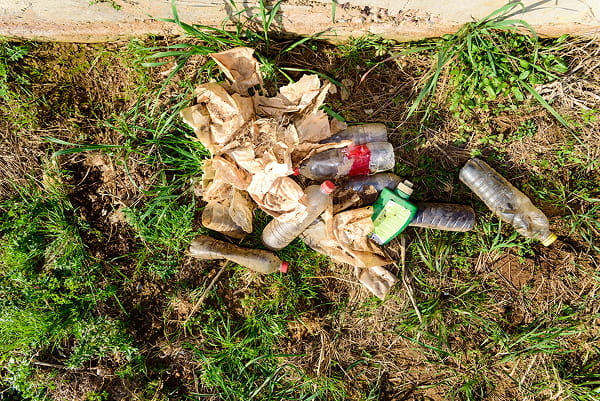
It’s the end of the season. You’ve finally got round to tidying the shed, and you’re staring at a tower of cracked plastic pots, three half-empty bottles of weedkiller, a rusting tin of slug pellets, and a bag of compost from two summers ago. You’d happily bin the lot, but something tells you that’s not quite right.
It isn’t.
Plant pots can’t go in most kerbside recycling bins. Garden chemicals are classed as hazardous household waste, which means strict rules apply. And as the householder, you’re legally responsible for making sure the lot ends up in the right place.
This guide walks you through what can be recycled, what can’t, where to take it in London, and when it makes more sense to call in a professional.
By the end, you’ll know exactly how to clear that shed without harming the environment or risking a fine.
Why Garden Waste Isn’t as Simple as It Looks
A surprising amount of what comes out of a typical London garden falls outside the bounds of standard household recycling.
Most plant pots are made from a type of plastic that recycling sorting machines literally cannot detect. Garden chemicals, meanwhile, sit in a separate legal category altogether. Pour them down the drain and you’re breaking the law. Tip them onto the soil and you’re contaminating the local water supply.
Under the Environmental Protection Act 1990, every householder has a legal duty of care to make sure their waste is disposed of by a licensed carrier. Get this wrong and you can face fines of up to £5,000.
London councils take this seriously, particularly given London’s fly-tipping crisis and the cost of clearing illegally dumped waste each year.
The good news is that knowing how to dispose of garden chemicals safely, and where to take old pots, is mostly a question of matching each item to the right route.
Old Plant Pots: What Can and Can’t Be Recycled
The Black Plastic Problem
The vast majority of traditional plant pots are made from carbon black polypropylene. The black colouring comes from a pigment that absorbs the infrared light used by sorting machines at recycling plants. To the machine, the pot effectively doesn’t exist, so it gets pushed straight to landfill.
This is why your council probably won’t take black pots in the kerbside recycling bin, even though they’re technically a recyclable plastic.
How to Spot a Recyclable Pot
Newer pots are easier. Look for:
- Taupe, beige, or terracotta-coloured plastic pots
- A clear recycling symbol moulded into the base
- Pots labelled “recyclable” by the manufacturer
Many big nurseries and growers have switched to taupe pots over the last few years, and these can be picked up by sorting machines. If your pot is one of these, your kerbside recycling may well accept it. Always check with your local council to be sure.
Terracotta and Ceramic Pots
Traditional terracotta and ceramic pots aren’t recyclable through standard schemes. Your best options are:
- Reuse them in your own garden
- Donate them to a community garden, allotment, or neighbour
- Smash broken pieces and use them as drainage at the bottom of new pots
- Take them to a Reuse and Recycling Centre as inert waste
Where to Recycle Plastic Plant Pots in London
If you’ve got a stack of pots taking up space, you’ve got more options than you might think to recycle plastic plant pots in London.
Several major garden centres run take-back schemes, including some Squire’s, Dobbies, and B&Q branches. Independent nurseries are often happy to take clean pots back too, as they can reuse them straight away.
Community gardens and local allotments are another good route. Many run on tight budgets and welcome donations of pots, trays, and labels. A quick post on a local Facebook group or Olio is usually enough to find someone nearby who’ll take them off your hands.
For larger volumes, your borough’s Reuse and Recycling Centre will usually accept rigid plastics in their general recycling stream.
Garden Chemicals: The Stuff You Really Shouldn’t Bin
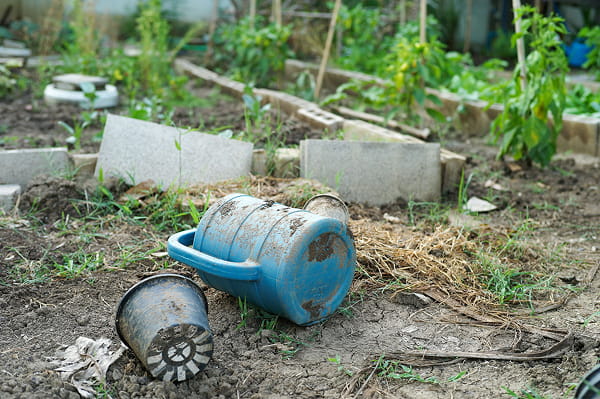
Knowing how to dispose of garden chemicals safely starts with recognising what counts as a chemical in the first place.
What Counts as Hazardous Garden Waste
Hazardous household waste from the garden includes:
- Weedkillers (including glyphosate-based products)
- Pesticides and insecticides
- Fungicides
- Slug pellets
- Liquid lawn feed and fertilisers
- Creosote and wood preservatives
- Old paint or strippers used outdoors
- Any unlabelled bottles or tins inherited from a previous owner
Around 30% of UK households store unused garden chemicals at home, often forgotten at the back of a shed or under the kitchen sink.
What Never to Do
Some habits are surprisingly common but cause real damage:
- Don’t pour chemicals down the sink, drain, or toilet. They contaminate the water system and the practice is illegal.
- Don’t tip them onto soil, the lawn, or a compost heap.
- Don’t burn containers or pour residue onto a bonfire. The fumes are toxic.
- Don’t mix different chemicals together. Some combinations are dangerous.
- Don’t put part-full bottles in your general waste. They can leak in the bin lorry.
How to Store Chemicals Safely Until Disposal
If you’re not going to deal with everything immediately:
- Keep chemicals in their original containers with the labels intact
- Store upright in a cool, dry, ventilated place
- Keep well away from children, pets, and food
- Never decant into unmarked bottles, particularly drink bottles
Where to Take Garden Chemicals in London
Most London boroughs offer some form of hazardous waste service, but availability varies.
Many Reuse and Recycling Centres accept liquid garden chemicals, but some don’t. A few boroughs run separate hazardous waste appointments where staff collect from your home or you book a slot to drop items off. Always ring or check the council website before turning up with a boot full of weedkiller.
Triple-rinse empty plastic chemical containers before recycling them, but only if they’re labelled as recyclable. Otherwise they go in general waste.
A practical example: a Haringey homeowner clearing a deceased relative’s shed found a 15-year-old bottle of paraquat-based weedkiller, a substance now banned in the UK. The right course of action is a booked hazardous waste appointment, not the household bin.
For larger or mixed loads, a licensed waste carrier offering garden waste removal in London can usually take both chemicals and general garden waste in one go.
Other Tricky Garden Items Worth Mentioning
Plant pots and chemicals aren’t the only awkward items lurking in a typical shed.
Old Compost, Soil, and Turf
Most London boroughs don’t accept soil or compost in the green garden waste bin. Reuse what you can as a mulch or top-up for raised beds. For larger amounts, take it to a Recycling Centre. Curious about what happens to recycled waste once it leaves your kerb? It’s worth a read.
Pressure-Treated and Creosote-Soaked Timber
Old fence panels, decking, and railway sleepers treated with creosote can’t be burned or composted. The chemicals release toxic smoke and leach into soil. Take them to an RRC that accepts treated timber, or include them in a clearance booking.
Battery-Powered Garden Tools
Old electric mowers, strimmers, and hedge trimmers are classed as WEEE (Waste Electrical and Electronic Equipment). Remove the battery, recycle it separately at a battery collection point, and take the tool to an RRC or arrange collection.
When a Professional Clearance Makes More Sense
For small jobs, a trip to the recycling centre will do the job. For bigger ones, especially anything involving how to dispose of garden chemicals safely alongside general garden waste, a professional clearance often saves time, money, and hassle.
It’s worth booking a waste removal team if you’re dealing with:
- A full shed clear-out after moving in or inheriting a property
- A mixed load of chemicals, pots, soil, broken furniture, and timber
- A landscaping job where the client wants the site left clean
- Anything you simply don’t have the vehicle, time, or licence to transport
A licensed carrier handles the legal side too. You stay protected from any liability for fly-tipping, and you’ll usually get a waste transfer note for your records.
For example, a Bromley landscaping company recently cleared an overgrown garden for a client. The job included broken pots, fertiliser sacks, half-used pesticide containers, and three sacks of old soil. A single booking with us covered the lot in one trip.
The JunkApp makes this even easier for London residents. You can get a quote, book a slot, and track the team’s arrival in real time, all from your phone. First-time users also get a discount on their booking, which helps soften the cost of bigger clearances.
For anything truly large, like a full house clearance where the garden is just one part of the job, the same principle applies. One booking, one team, the right paperwork.
A Quick Pre-Clearance Checklist
Before you start, take ten minutes to sort:
- Separate pots by material and condition (recyclable, reusable, broken)
- Set chemicals aside in their original labelled containers
- Identify anything that could be donated or reused
- Pull out items for the recycling centre
- Decide what genuinely needs disposing of by a professional
A bit of sorting up front makes the whole job faster, whether you’re handling it yourself or booking a collection.
Getting It Right First Time
Responsible garden waste disposal isn’t complicated once you know which route fits which item. Plant pots have more options than people realise, from taupe-pot kerbside recycling to garden centre take-back schemes and community garden donations. Garden chemicals need more care, but every London borough offers a route for hazardous household waste if you ask.
The two real risks are putting things in the wrong bin and using an unlicensed operator to take them away. Both can land you with a fine and contribute to the wider problem of contamination and fly-tipping across the capital.
For straightforward jobs, a Saturday trip to the RRC will do. For mixed loads, large clear-outs, or anything you’d rather not transport yourself, a licensed clearance team is the simplest answer. Whichever route you take, the next gardening season is a much nicer prospect when the shed is clear and you know everything ended up where it should.
If you’re already mid clear-out, a spring tidy is a good moment to deal with the rest of the house too.